








How to Compare Activewear Fabric Quotes :Unit Price, Fabric Width, GSM and Order Terms
Unit Price, Fabric Width, GSM and Order Terms
When quotes from two fabric suppliers arrive, most buyers instinctively compare unit prices. However, fabric quotes are rarely directly comparable—not necessarily because one supplier is charging more, but because the quotes are based on different assumptions. Before making a decision, convert the prices to the same basis, check the specifications, performance and terms, and then calculate the total cost.
Why Two Fabric Quotes Cannot Be Compared Directly
Different prices for what appears to be the same fabric are common. This alone does not establish that either supplier is overcharging; the two quotes may describe different products or supply conditions.
The differences usually fall into four areas:
Pricing unit. Kilograms, meters and yards are all used in international fabric trade. Circular-knitted fabrics are often priced per kilogram because yarn accounts for a large share of the cost. Woven fabrics, printed fabrics and stock fabrics are often priced per meter or yard.
Fabric width. A price per meter is not enough on its own: you need to know how much usable width it includes. Two fabrics with the same price per meter may differ by several percentage points in actual fabric consumption when laid out for cutting.
Fabric weight and fiber composition. Differences in GSM and fiber content can affect fabric cost.
Quotation basis. Check whether taxes and freight are included, whether the quote covers stock colors or custom-dyed colors, and whether yarn price changes can affect the price during the quotation validity period.
The prices alone do not provide a meaningful comparison until both quotes have been put on the same basis.
Step 1 Convert Prices to the Same Unit
Two common pricing methods are per kilogram, often used for knitted fabrics, and per meter or yard, often used by garment manufacturers. First calculate the weight per meter, then multiply it by the price per kilogram.
Formulas:
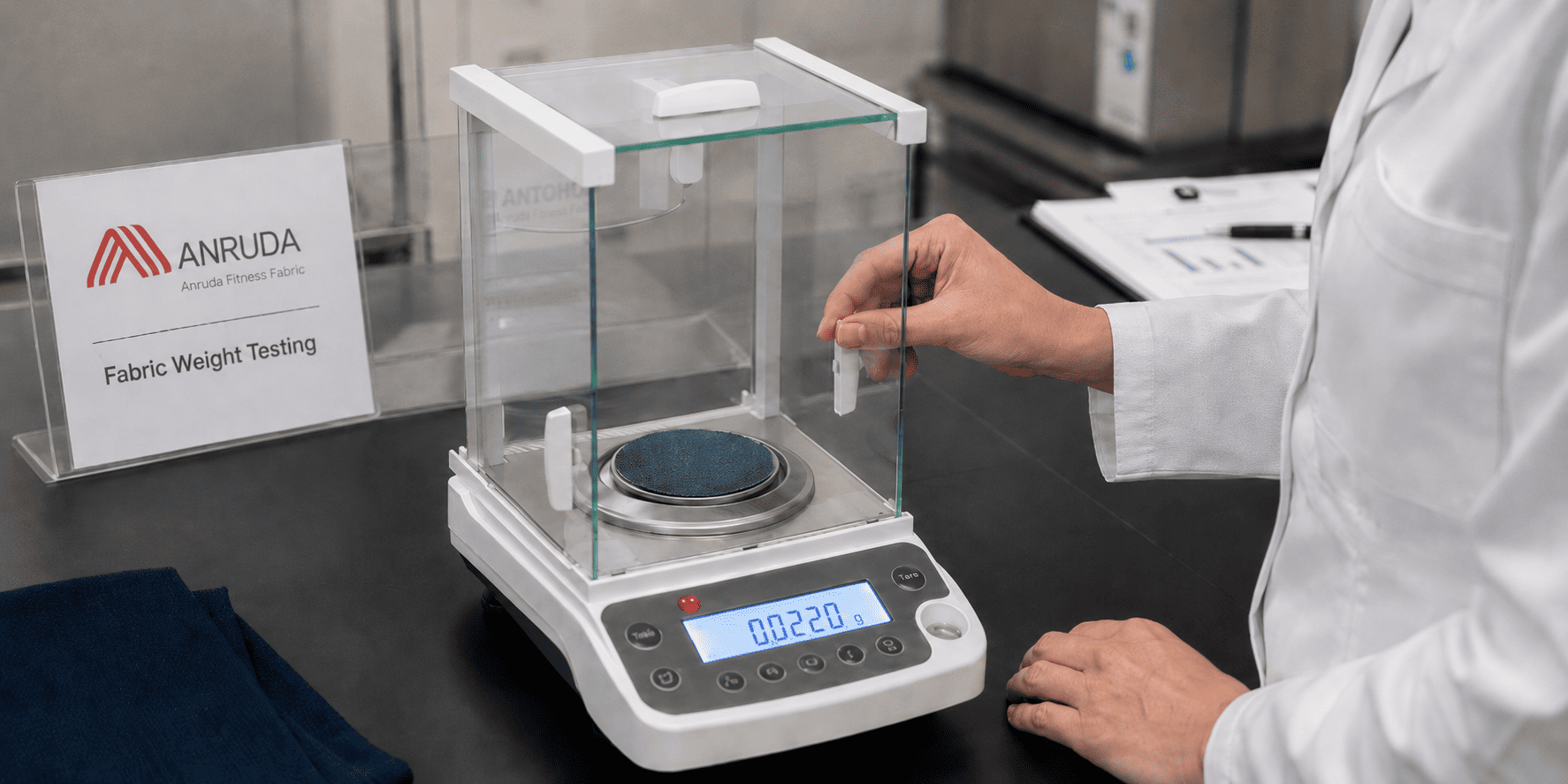
Weight per meter (kg/m) = Width used for weight calculation (m) × Fabric weight (g/m²) ÷ 1,000
Price per meter = Price per kilogram × Weight per meter
Worked example using hypothetical data:
Supplier A quotes $8.50/kg for a 220 GSM fabric, with both the width used for weight calculation and the usable width at 150 cm. Weight per meter: 1.50 × 220 ÷ 1,000 = 0.330 kg/m. At $8.50/kg, this equals $2.805/m, or approximately $2.56/yd.
Supplier B quotes $2.60/yd for a 240 GSM finished open-width fabric with a usable width of 144 cm. Assume that the width used for weight calculation is also 144 cm. One yard equals 0.9144 meters, so $2.60 ÷ 0.9144 = approximately $2.843/m. Weight per meter is 1.44 × 240 ÷ 1,000 ≈ 0.346 kg/m. Using the unrounded figures, the equivalent price is approximately $8.23/kg.
Supplier A’s $8.50/kg therefore works out to approximately $2.56/yd, calculated by multiplying the price per meter by 0.9144, which is close to Supplier B’s $2.60/yd. A comparison based only on the original pricing units can lead to a very different conclusion. This conversion only puts the prices on a common unit basis; the fabrics differ in GSM and width, so specifications and garment performance must still be considered.
Conversions from a kilogram price should use the net fabric weight per meter included in the invoiced weight. When estimating this from width and GSM, use the width included in that weight rather than automatically using the usable width. Usable width means the width available for marker making after final finishing and heat setting, excluding unusable selvages or pin-marked edges. It is primarily used to compare marker efficiency. The examples above assume that the width used for weight calculation and the usable width are identical. Quotes should specify usable width in centimeters and the applicable tolerance. If a quote says “approximately 150,” confirm the width definition, unit and tolerance.
Step 2 Check the Details Behind the Specifications
After converting the prices, establish whether the two quotes cover equivalent fabrics. If the specifications do not match, there is no sound basis for comparing prices.
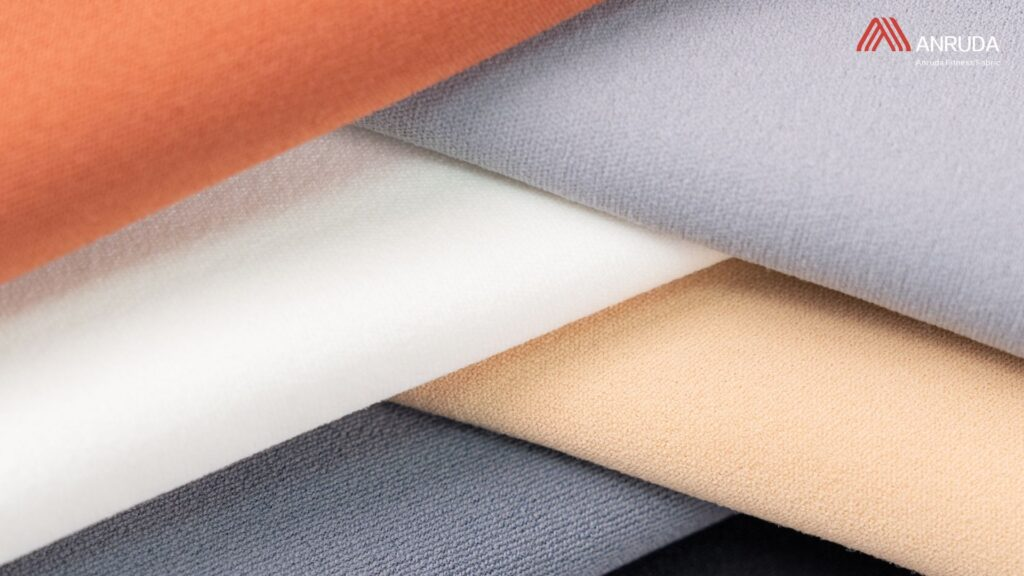
Confirm each specification on the quote: fiber composition and tolerances—for example, 90% nylon / 10% spandex, with the test method and applicable fiber-content tolerances stated; GSM and tolerance, including whether 220 GSM is a nominal or guaranteed value; usable width and tolerance, including whether 150 cm refers to usable width; fabric construction and finishing, including whether they match the approved development sample; and whether the colors are stock colors or custom-dyed colors.
The less precise the specifications, the less meaningful the price comparison. If a quote only says “four-way stretch nylon/spandex,” first obtain the full specifications, then compare prices.
Step 3 Verify Performance Claims
At the quotation stage, ask whether the test reports apply to the specific fabric article, color and finish being purchased.
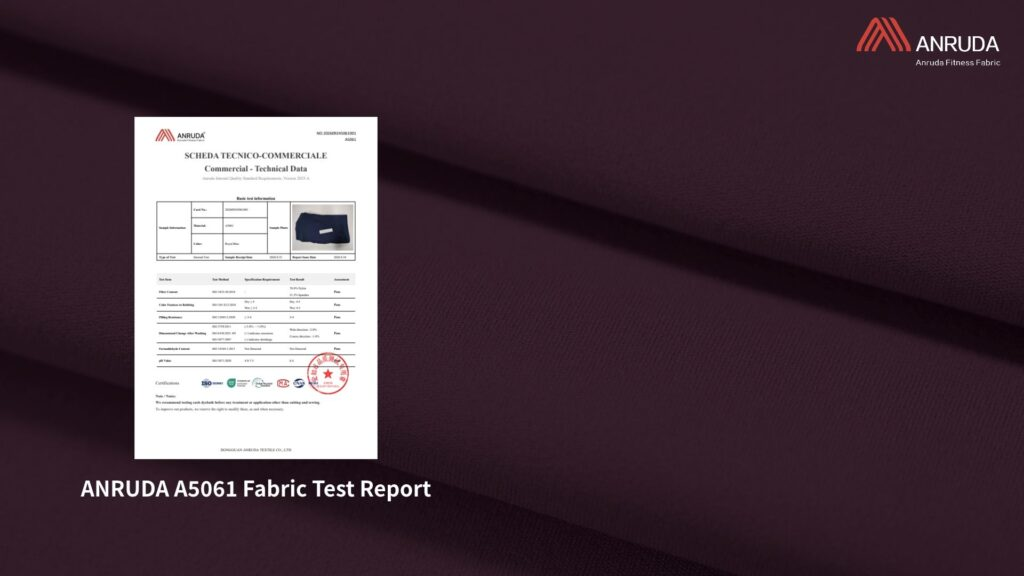
Three common mismatches deserve attention. Results for greige fabric, white finished fabric or another color do not directly demonstrate that the black or fluorescent-colored finished fabric being purchased has the same colorfastness or chlorine resistance. For an older report, check whether the product, processing, color and applicable production lot still match the current purchase. A report that only confirms fiber composition does not establish garment shape retention, which also requires assessment of stretch and recovery; opacity must be evaluated in relation to fabric construction, GSM, color and coverage under stretch.
At the same price, a supplier able to provide test reports for the relevant fabric article and color offers lower risk-related costs. This belongs in the quotation comparison itself, rather than being left until after price negotiations.
Step 4 Compare Order Terms as Well as Unit Prices
When unit prices are close, order terms can make the real difference in total cost. Clarify the minimum order quantity (MOQ), price breaks, lead times, payment terms, tolerances between production lots, packaging and roll lengths.
| Term | What to Compare | Effect on Total Cost |
| MOQ | Separate quotations for stock colors, custom-dyed colors and new developments | Buying too much ties up inventory; quantities below the dyeing minimum may prevent production. |
| Price breaks | Price differences at different quantity tiers | Affect order quantity decisions. |
| Lead times | Separate timelines for sampling, lab dip approval and bulk production | Affect garment production schedules; hidden costs from late delivery can far outweigh unit-price savings. |
| Payment terms | Deposit percentage and balance payment milestones | Affect working capital requirements. |
| Lot-to-lot tolerances | Acceptance criteria for GSM, width and shade variation | Determine how nonconforming bulk fabric will be handled. |
| Packaging and roll lengths | Roll length, rolling method and labeling | Affect cutting waste and storage. |
Suppose Supplier A is 5% cheaper than Supplier B, but requires twice the MOQ and three additional weeks of lead time. If your garment production schedule is tight and cash flow is limited, A may not be the better choice. Unit-price differences are visible costs; differences in terms create less visible costs.
Step 5 Calculate the Total Landed Cost
Common costs beyond the unit price include freight—whether it is included and which Incoterms apply; duties and taxes, depending on the destination country; inspection costs, including third-party inspections or sampling inspections; defects and returns, including how fabric outside agreed tolerances will be handled; and cutting waste, as different widths can change fabric consumption for the same garment pattern.
A simple calculation is: Total landed cost = Fabric purchase cost + Freight, insurance, customs clearance charges, duties and other applicable taxes not already included in the quote + Inspection costs. Check each item against the agreed trade terms to avoid double counting. Expected cutting waste and defect-related losses should be accounted for separately when evaluating the purchasing decision.
The unit price being compared is not the full amount you will ultimately pay. Provided both fabrics meet the same garment performance requirements, a more suitable usable width may improve marker efficiency. Two quotes with similar unit prices can therefore still lead to significantly different total costs.
Step 6 Build a Side-by-Side Quotation Comparison
The previous steps can be brought together in a reusable comparison table.
| Field | Supplier A | Supplier B | Notes |
| Supplier / Fabric article number | |||
| Quotation date / Validity | |||
| Fiber composition / GSM / Width / Construction / Finish | |||
| Pricing unit / Unit price | |||
| Equivalent unit price | Convert using the formulas in Step 1. | ||
| MOQ / Price breaks | |||
| Lead times (sample / lab dip / bulk production) | |||
| Payment terms | |||
| Lot-to-lot tolerance criteria | |||
| Applicability of test reports | |||
| Sample status | |||
| Missing information |
Give extra attention to quotes that are far below market levels without a clear explanation of the specifications; provide a price without an article number or full specifications; include test reports that do not match the product, or refuse to provide them; describe every MOQ, lead time and tolerance as negotiable without putting anything in writing; or have a very short validity period accompanied by pressure to order immediately.
A quotation comparison that supports a confident decision includes prices converted to the same unit, complete and matching specifications, verifiable performance claims and clearly documented order terms.
Beyond the comparison table, one factor cannot be replaced by contract terms alone: consistent quality. Will the second lot, third lot and repeat orders maintain the same quality? This is why lot-to-lot tolerances and comparisons against retained samples deserve a place in the order terms.

At Anruda, we look beyond the figures on a quotation to whether those specifications are met in actual deliveries. With knitting, dyeing and finishing, and laboratory testing capabilities, our professional team can help buyers review fabric specifications and clarify testing requirements based on the intended garment application, while monitoring the consistency of key parameters during sampling and bulk production. Helping buyers understand the quality and service behind the price is fundamental to supporting informed purchasing decisions and building long-term partnerships.
Frequently Asked Questions About Activewear Fabric Quotes
1. How do I convert a price per kilogram to a price per yard?
Weight per meter (kg/m) = Width used for weight calculation (m) × Fabric weight (g/m²) ÷ 1,000. Price per meter = Price per kilogram × Weight per meter. Price per yard = Price per meter × 0.9144. The width used for weight calculation must correspond to the invoiced fabric weight; usable width is used to compare marker efficiency.
2. Why do suppliers quote very different prices for the same fabric?
The quotation basis often differs: GSM, width, fiber composition, stock versus custom-dyed colors, and what the price includes may all vary. Confirm the full specifications before comparing prices.
3. Does a lower MOQ always mean a higher unit price?
No. It depends on whether the fabric is available in stock or requires custom dyeing. Stock colors usually have lower MOQs, while custom-dyed colors must meet the minimum dyeing quantity.
4. What should I do if a quote does not specify GSM or width tolerances?
Ask the supplier to provide the missing information before comparing prices. A quote with incomplete specifications has limited value for comparison.
5. Should I choose the supplier with the lowest total cost?
Total cost is an important consideration, but it should not be the only one. The applicability of test reports, bulk quality consistency records and communication responsiveness also affect risk-related costs.
Author: Anruda Textile Technical Team
Published: November 12, 2026
Last Updated: November 12, 2026