
 Продукция


How to Choose Mesh Fabric for Sportswear: A Buyer’s Guide
Running, gym training, cycling and ball sports all place demands on a garment’s ability to release heat and manage moisture. Mesh fabrics are therefore widely used in sports T-shirts, training tanks, jerseys, athletic shorts and areas of a garment that need additional ventilation.
For sportswear brands, however, choosing a mesh fabric involves more than deciding whether it looks breathable. The size and construction of the openings, yarn selection, fabric weight and hand feel all affect comfort, cost and the finished garment. The right choice depends on the garment type, activity level, placement and required performance.
1. What Is Sportswear Mesh Fabric?
Sportswear mesh is a category of fabric in which a knitted structure creates regular or irregular openings. Compared with knits that have a more closed surface, the open structure provides more direct pathways for air, heat and moisture to move through the fabric.
Mesh describes a fabric structure, rather than a specific fiber. Polyester, nylon, recycled fibers and stretch blends containing elastane can all be knitted into mesh structures.
Actual performance depends on several factors: the size, shape, arrangement and density of the openings; fabric thickness and weight; yarn fineness; stretch and recovery; and dyeing, printing and other finishing processes. Together, these influence air permeability, coverage, softness and durability.
When other factors are similar, larger openings generally allow more air to pass through. They may also increase show-through and reduce coverage or structural stability. A denser mesh generally offers better coverage. Finer yarns can produce a softer, smoother surface, although abrasion and snag resistance may need closer evaluation.
2. What Are the Benefits of Mesh Fabric in Sportswear?
The openings in a mesh structure promote airflow and help heat and moisture escape from inside a garment. This makes mesh particularly useful in areas prone to perspiration, such as the back, underarms, chest and side panels.
An open mesh construction can also reduce material use and garment weight, contributing to a lighter feel. This can be valuable for running apparel, summer training wear and clothing intended for exercise in hot conditions.
Mesh can be combined with a more substantial main fabric to assign different functions to different garment areas. A brand might place mesh at the back and underarms for ventilation while using a fabric with greater coverage and support at the bust, waist or seat.
Mesh also offers design possibilities. Changes to the openings, geometric layout or jacquard pattern can create distinct visual effects, making the structure part of the garment’s appearance as well as its ventilation strategy.
3. What Are the Limitations of Sportswear Mesh?
Mesh has trade-offs that should be assessed during development. Larger openings or a looser structure usually increase the risk of show-through. In close-fitting sportswear, stretching can widen the openings further. Coverage should therefore be checked at the stretch level expected in the finished garment, rather than judged only from a flat fabric swatch.
An open structure may also catch on zippers, hook-and-loop fasteners, accessories or rough surfaces. Abrasion and snag resistance deserve particular attention for teamwear, training apparel and outdoor sportswear.
Lightweight mesh typically provides limited support. It is generally unsuitable as the sole fabric in areas requiring substantial support or compression, such as the front of a sports bra or a leggings waistband.
If yarn selection, knit construction or heat setting is unsuitable, repeated stretching may alter the openings, cause local distortion or lead to poor recovery. Mesh used at load-bearing areas, including shoulders and side seams, should be assessed for stretch recovery and seam stability.
4. Which Garments Can Use Sportswear Mesh?
Running T-Shirts and Training Tops
Running apparel needs to limit heat buildup during movement. A lightweight, fine-gauge mesh with suitable quick-drying performance can be used throughout a top or placed in high-perspiration areas such as the back, underarms and sides. Fabric selection should balance airflow, garment weight, next-to-skin comfort and how the garment feels after sweating.
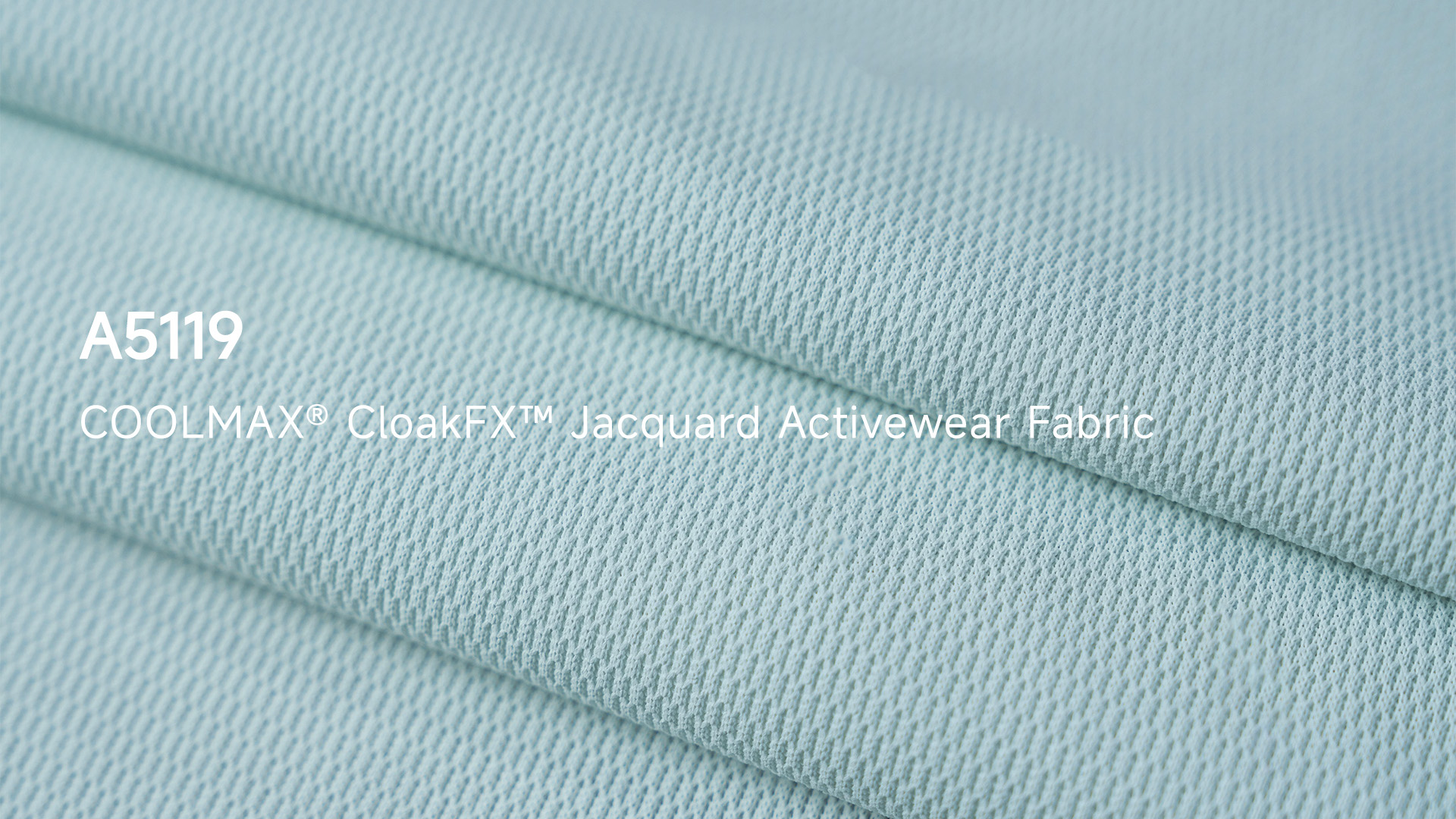
For example, Anruda A5119 COOLMAX® CloakFX™ jacquard fabric combines a fine mesh structure with a lightweight fabric weight of 120 g/m². Its patterned surface adds visual texture while the mesh structure promotes ventilation. The engineered cross-section of its COOLMAX® CloakFX™ fibers is designed to support capillary moisture movement and evaporation; the fiber technology is also designed to reduce the visible appearance of sweat marks through an optical effect. It is a potential option for running tops and training T-shirts.
Basketball Jerseys, Football Jerseys and Other Teamwear
Teamwear needs a balance of ventilation, coverage and durability. A medium-weight mesh can provide airflow while maintaining a reasonably stable appearance. If the garment will carry player numbers, team crests or sponsor graphics, confirm the fabric’s compatibility with the intended printing or transfer process early in development.
Gym Tanks and Training Apparel
Gym clothing must accommodate a wide range of shoulder, back and torso movements. Fine stretch mesh or a micro-perforated knit can be used on the back, shoulders and side panels. For a close-fitting design, check show-through under stretch, stretch recovery and seam stability.
Ventilation Panels in Sports Bras and Yoga Wear
In sports bras and yoga wear, mesh is generally used for localized ventilation rather than as the main support fabric. Possible placements include the back, straps, areas near the underbust band and side panels. Assess next-to-skin comfort, coverage under stretch, recovery, and color and performance compatibility with the main fabric.
Cycling Apparel and Running Tights
Cycling apparel and fitted running garments place particular demands on stretch, fit and aerodynamics. Stretch mesh can be placed on the back, under the sleeves or in side panels to aid heat release, but excessively large openings may be unsuitable. Evaluate structural stability while the fabric is held under sustained stretch, as well as seam performance where it joins the main fabric.
Athletic Shorts Linings
A shorts lining typically needs to be lightweight, breathable and quick-drying. Fine mesh can suit this application. Check whether the surface feels rough against the skin, whether it causes irritation during movement, and whether its dimensions remain stable after repeated washing.
Sports Jacket and Outerwear Linings
Lightweight mesh can be used as a lining in sports jackets or windbreakers. It separates the skin from the outer fabric and can improve airflow inside the garment. For this application, consider fabric weight, static buildup, snag resistance and friction against the outer layer.
5. Which Specifications Should Buyers Confirm?
When sourcing or developing sportswear mesh, start by confirming fiber composition, elastane content, fabric weight and usable width. If the project has sustainability requirements, verify the source of any recycled content and the relevant certifications.
Fabric weight affects garment weight, coverage and body. Usable width affects pattern layout, material yield and costing. Buyers should also confirm the size, shape, density and arrangement of the openings, along with stretch direction and recovery. Test show-through and changes in the mesh openings at the stretch level expected in the finished garment; a flat swatch alone cannot establish how the fabric will perform in use.
Performance requirements should follow the garment’s intended application. These may include moisture management, drying rate, colorfastness to laundering, perspiration, rubbing and water, as well as abrasion resistance, snag resistance, shrinkage and dimensional stability after laundering. For garments combining light and dark colors, pay particular attention to color transfer during rubbing and washing.
If the product requires heat-transfer printing, digital printing, antimicrobial treatment, a cooling finish or a moisture-management finish, confirm process feasibility in advance. Also assess how the process could affect hand feel, color, fabric structure and final performance.
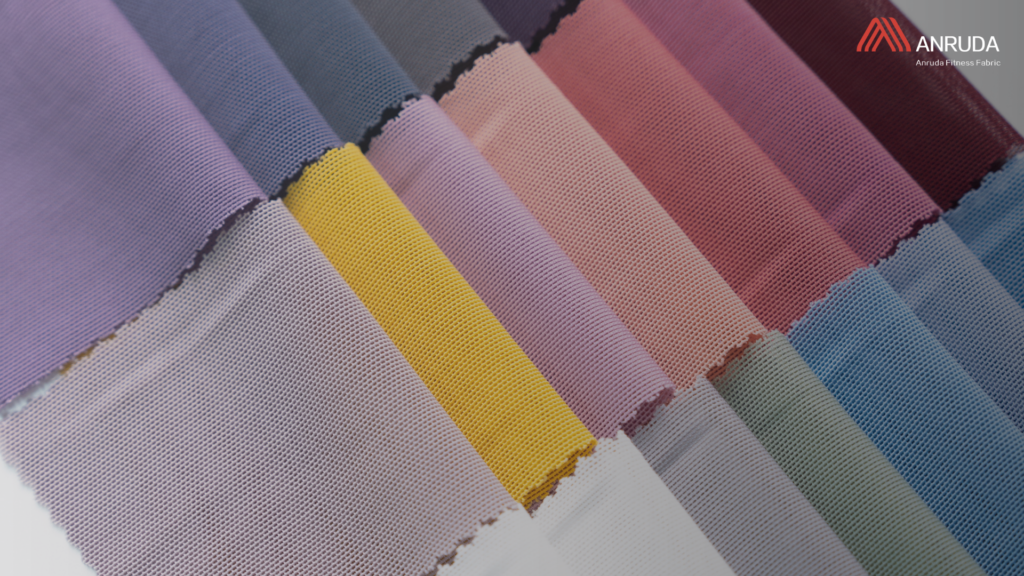
The most suitable mesh is the one that meets the finished garment’s design and wear requirements. Defining the garment type, placement and essential performance criteria early helps brands narrow their fabric choices, reduce development revisions and make more reliable production decisions.
FAQ: Common Questions About Sportswear Mesh Fabric
1. Are larger mesh openings always better?
No. Larger openings can improve airflow, but they may reduce coverage, structural stability and snag resistance. Smaller, denser openings may be more appropriate for close-fitting sportswear, shorts linings and stretch ventilation panels. Consider garment type, placement, activity level, fabric weight, recovery and show-through under stretch alongside opening size.
2. Does mesh fabric always wick moisture?
No. A mesh structure can promote airflow and moisture movement through its openings, but wicking performance also depends on fiber properties, yarn construction and any applied finish. It should be verified with appropriate testing.
3. Can mesh be used for an entire sports T-shirt?
Yes. A lightweight, fine mesh with adequate coverage can serve as the main fabric of a sports T-shirt. Fabrics with larger openings or a looser structure may be better suited to localized ventilation panels.
4. How can I tell whether a mesh fabric will be see-through?
Examine it both flat and stretched to the level expected in the finished garment. Check it under different lighting conditions and in the intended colors. Coverage under stretch is especially important for close-fitting clothing.
5. What information should I provide when requesting custom sportswear mesh?
Provide the target garment type, intended mesh placement, preferred fiber composition, fabric weight range, usable width, colors, stretch requirements, desired opening pattern, functional finishes, estimated quantity and required test standards. These details help the supplier match an existing fabric or assess a custom development request.
Author: Anruda Textile Technical Team
Published: September 24, 2026
Last Updated: September 24, 2026