




Pilling, Shedding, or Roughness After Washing? How to Choose Sueded Activewear Fabrics
When sourcing activewear fabrics, you will often come across the term “sueded.” Sueding is a finishing process rather than a fiber composition. It involves mechanically abrading the fabric surface to create a short, fine nap that enhances the fabric’s feel and appearance.
A soft, smooth hand feel is one of its main advantages, but brands often have concerns: Will the fabric pill during wear? Will it shed after a few washes? How long will the original softness last? Choosing a suitable sueded activewear fabric requires considering the intended garment application and finding a balance between comfort and durability.
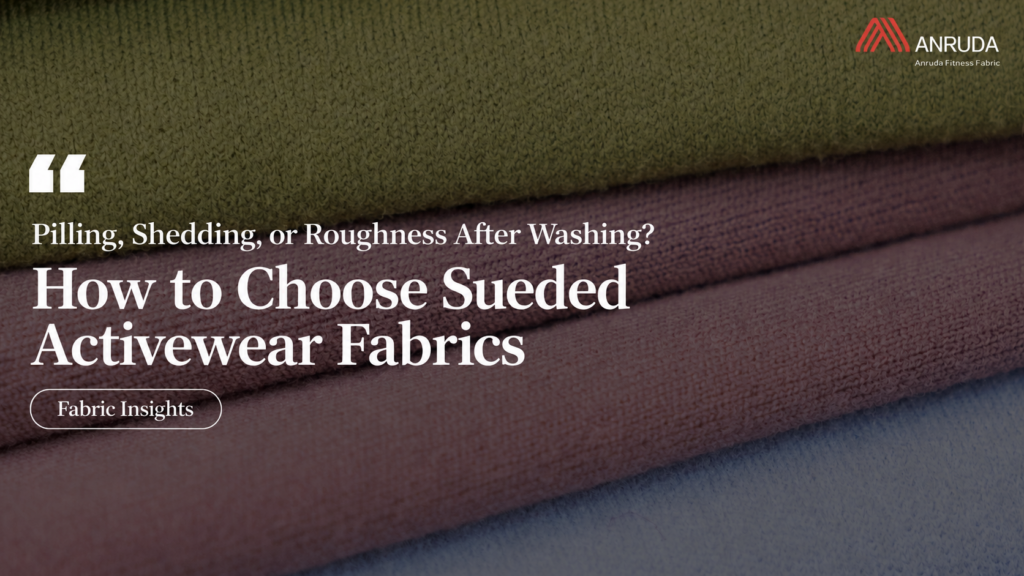
What Is Sueded Fabric?
Sueded fabric is fabric that has undergone mechanical surface abrasion to produce a fine, short nap. Sueding changes the fabric’s surface rather than its fiber composition and can be applied to polyester, nylon, and their blends.
During processing, abrasive rollers or brushes work against the fabric surface. By controlling the abrasive grade, processing speed, fabric tension, and number of passes, manufacturers can create anything from a subtle peach-skin feel to a more pronounced short nap. Loose-fiber removal, heat setting, and other finishing steps may follow as needed.
For activewear, sueding offers two main benefits: a softer, smoother next-to-skin feel and, with a suitable nap, the ability to trap air and provide additional warmth.
However, a more pronounced nap does not necessarily mean better performance. Excessive processing may reduce fabric strength and abrasion resistance, while repeated rubbing and washing may alter the surface nap or lead to shedding and pilling. Fabric selection should therefore consider both the initial hand feel and the durability of the surface finish.
Types of Sueding Processes
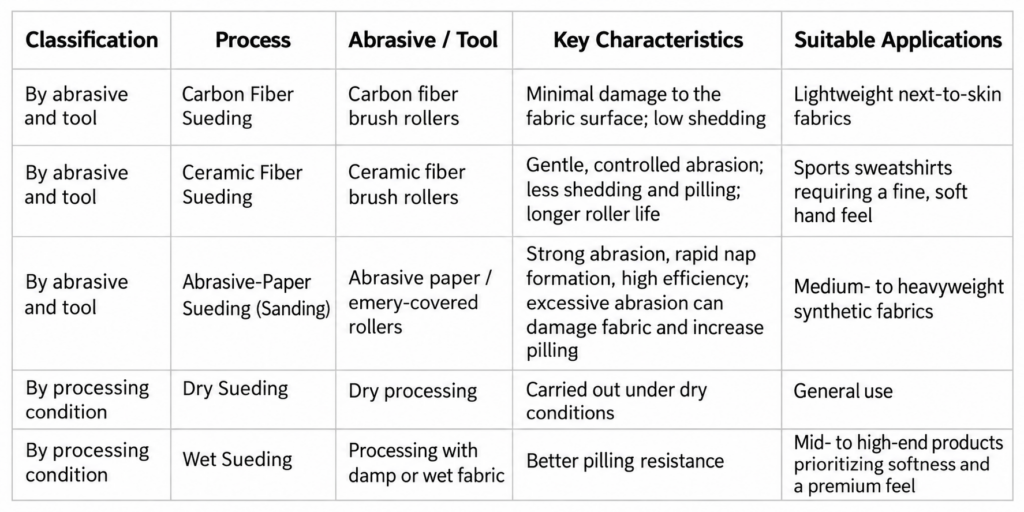
Sueding processes differ mainly in the abrasive materials and tools used, as well as whether the fabric is processed dry or wet. The roller material and processing conditions influence the density, length, and feel of the resulting nap.
Carbon fiber sueding uses carbon fiber brush rollers rotating at high speed to raise a fine nap on the fabric surface. It produces a short, dense, even nap with a soft hand feel, relatively little damage to the fabric structure, and limited shedding. It is suitable for lightweight fabrics worn next to the skin.
Ceramic fiber sueding uses rollers fitted with ceramic fiber brushes. The abrasive action is gentler and more controllable, producing a finer, smoother nap with less shedding and pilling. The rollers also offer greater durability. This process is suitable for sports sweatshirts that require a particularly refined hand feel.
Abrasive-paper sueding, also known as sanding, uses abrasive paper or emery-covered rollers to abrade the fabric surface. Its stronger abrasive action raises a dense nap quickly, making it an efficient option for medium- to heavyweight synthetic fabrics. Excessive abrasion, however, can damage the fabric and increase its tendency to pill.
Sueding can also be classified as dry sueding or wet sueding. Dry sueding is carried out on dry fabric, while wet sueding processes the fabric in a damp or wet state. The two methods require different equipment and process controls. Wet sueding produces a more uniform, fuller nap with a soft, supple hand feel and better pilling resistance, making it suitable for mid- to high-end products where softness and perceived quality are priorities.
Sueded Fabric vs. Raised Fleece and Polar Fleece
Sueded fabric, raised fleece, and polar fleece can all have a napped surface, but they differ in processing methods, surface appearance, and typical applications.
Sueded fabric is mechanically abraded to create a short, fine nap. It is commonly used in yoga wear, close-fitting training apparel, and athleisure, with an emphasis on a soft, smooth next-to-skin feel.
Raised fleece typically undergoes raising or napping to create a more pronounced, lofty surface. It is commonly used in sweatshirts, insulating sportswear layers, and jacket linings. The raised fibers help trap air, although actual thermal performance depends on fabric thickness, construction, and loft.
Polar fleece undergoes additional finishing, including tumbling after raising, to form a compact, bead-like fleece surface. It is commonly used in outdoor midlayers, casual jackets, and insulating garments.
How to Choose Sueded Activewear Fabrics
When selecting sueded activewear fabrics, brands should assess softness alongside the intended garment application, material selection, durability requirements, and target cost.
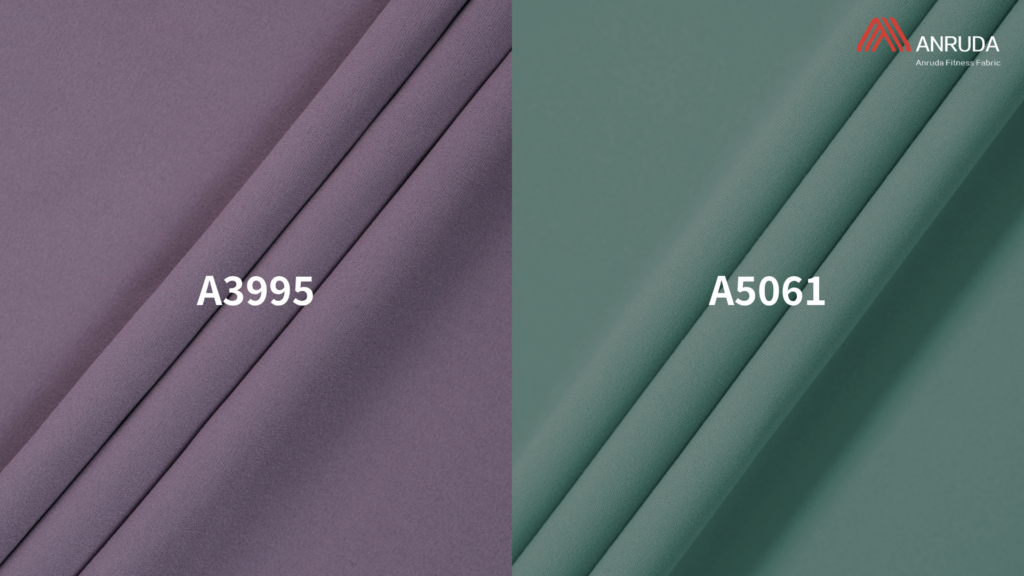
Anruda’s 3995# and 5061# offer two examples. Both belong to the AnruSkin™ fabric series.
A3995 combines nylon 6,6 with LYCRA® spandex and wet sueding on both sides. It emphasizes a fine surface nap and next-to-skin comfort, making it suitable for mid- to high-end yoga and training apparel projects that prioritize hand feel, stretch, and wearing comfort.
A5061 combines nylon 6 with conventional spandex and sueding on both sides to create a soft, even nap. It offers another fabric option for everyday fitness apparel and athleisure, particularly for brands seeking a balance between next-to-skin comfort, stretch, and budget.
Brands can base their selection on the refined skin feel and material combination of 3995#, or the balance of softness and cost offered by 5061#. The final choice should then be confirmed through fabric samples, testing, and garment sampling.
For washing and care, keep the following precautions in mind:
- Avoid high-temperature washing and tumble drying. Excessive heat can accelerate fiber shedding.
- Avoid brushing against the nap. After washing, gently smooth the surface in the direction of the nap.
- Do not overuse fabric softener. Excessive use can affect the surface feel and reduce moisture absorbency.
- Avoid prolonged exposure to direct sunlight. This can cause the fabric to stiffen and its color to fade.
FAQ About Sueded Activewear Fabrics
1. Are sueded activewear fabrics prone to pilling or shedding?
Sueded fabrics can pill or shed, but not all products develop noticeable problems. Performance depends on the fibers, yarns, fabric construction, sueding intensity, and removal of loose surface fibers. Friction during wear and washing and care practices also play a role. Before purchasing, assess pilling resistance, abrasion resistance, and the condition of the surface nap after washing.
2. Which tests should be confirmed before purchasing sueded activewear fabrics?
Key checks include pilling resistance, abrasion resistance, dimensional change after washing, colorfastness, and stretch recovery. Also assess changes in the surface nap, shedding, and overall appearance after washing.
For yoga leggings or training tights, check the opacity of the intended color under the stretch conditions expected during wear. If moisture wicking, quick drying, or thermal insulation is required, include the relevant performance tests.
Agree on test methods, conditions, and acceptance criteria with the supplier before bulk production.
3. Can sueded fabric stay soft after repeated washing?
Yes, although how well it retains its softness depends on the materials, processing, and care conditions. The surface nap may also change with washing and friction.
Evaluate hand feel, appearance, and stretch performance after an agreed number of wash cycles instead of judging the fabric solely by its initial sample.
4. Are sueded activewear fabrics always suitable for autumn and winter?
Not necessarily. Light sueding primarily improves softness and next-to-skin comfort and can also be used for year-round yoga and training apparel.
Suitability for autumn and winter depends on fabric thickness, loft, construction, and the garment’s insulation requirements.
5. How can brands ensure that the sueded finish in bulk production matches the approved sample?
Retain a physical approved reference sample and clearly specify the required hand feel on both sides, nap uniformity, color, fabric weight, width, and stretch performance.
During bulk inspection, compare the fabric with the reference sample under the same conditions and check for variation between rolls. For critical requirements, compare performance after washing as well.
Author: Anruda Textile Technical Team
Published: October 16, 2026
Last Updated: October 16, 2026